D&D Multiclassing Guide
Somewhere right now, a level-6 adventurer is staring at three brand-new 3rd-level spell slots with nothing to cast in them. That is multiclassing — the most powerful, and the most miscalculated, corner of 5e character building. Done with intent, you get a hero no single class could ever be; done by accident, a level 8 that fights like a level 4. This guide is the rules that tell those two apart — the ability requirements, the proficiencies you gain, and the combined spell-slot math nearly every guide fumbles. And if you would rather not do the arithmetic, describe a multiclass character in one sentence and the engine builds the whole correct sheet.
What is multiclassing?
When you gain a level, you can put it into a new class instead of your current one. A “Rogue 3 / Monk 9” character has three rogue levels and nine monk levels; their character level is 12, and their proficiency bonus (+4 at level 12) is set by that total. You keep the hit points, features, and proficiencies of every class you have taken — but with three important catches: there are ability-score requirements, you gain only a reduced set of proficiencies from each new class, and spellcasting uses a special combined rule. The rest of this page is those three things, done correctly.
The three taxes of multiclassing
Blending classes is powerful, but the game charges three structural “taxes” for it. Pay them knowingly and you come out ahead; pay them by accident and you get all the downsides of two classes and the payoff of neither.
- The stat tax. You must meet an ability-score minimum (almost always 13) in both the class you’re leaving and the one you’re joining — full table below.
- The ASI delay. Ability Score Improvements and feats are tied to your class level, not your character level. A Fighter 3 / Rogue 1 is a 4th-level character but gets no ASI, because neither class has reached 4. Every dip pushes your feats further out.
- Extra Attack doesn’t stack. Five levels of Fighter and five of Barbarian still attack twice, not three times — the most common trap for martial multiclasses (more below).
Multiclassing requirements (ability prerequisites)
To take a level in a new class — and to keep advancing the one you already have — you must meet the ability-score minimum for both. Almost every prerequisite is a 13 in the class’s key ability:
| Class | Ability requirement | Spellcasting |
|---|---|---|
| Artificer | INT 13 | Half caster |
| Barbarian | STR 13 | — |
| Bard | CHA 13 | Full caster |
| Cleric | WIS 13 | Full caster |
| Druid | WIS 13 | Full caster |
| Fighter | STR 13 or DEX 13 | — |
| Monk | DEX 13 and WIS 13 | — |
| Paladin | STR 13 and CHA 13 | Half caster |
| Ranger | DEX 13 and WIS 13 | Half caster |
| Rogue | DEX 13 | — |
| Sorcerer | CHA 13 | Full caster |
| Warlock | CHA 13 | Pact Magic |
| Wizard | INT 13 | Full caster |
Note: Monk, Paladin, and Ranger each need two abilities at 13, which makes them the hardest classes to multiclass into on the standard array.
What proficiencies you gain
Multiclassing does not give you a new class’s full starting proficiencies. You get a smaller, fixed set — and crucially, no new saving-throw proficiencies (those come only from your first class) and no second set of starting equipment:
| Class | Proficiencies gained when multiclassing in |
|---|---|
| Artificer | Light armor; Tinker's Tools |
| Barbarian | Shields; Simple weapons, Martial weapons |
| Bard | Light armor; 1 skill (any); 1 instrument |
| Cleric | Light armor, Medium armor, Shields |
| Druid | Light armor, Medium armor, Shields (nonmetal) |
| Fighter | Light armor, Medium armor, Shields; Simple weapons, Martial weapons |
| Monk | Simple weapons, Shortswords |
| Paladin | Light armor, Medium armor, Shields; Simple weapons, Martial weapons |
| Ranger | Light armor, Medium armor, Shields; Simple weapons, Martial weapons; 1 skill (class list) |
| Rogue | Light armor; Thieves' tools; 1 skill (class list) |
| Sorcerer | None |
| Warlock | Light armor; Simple weapons |
| Wizard | None |
The classic trap: multiclassing into Fighter grants light and medium armor, shields, and martial weapons — but not heavy armor. Many a would-be plate-wearing dip is undone by that one missing word.
Multiclass spell slots (the part everyone gets wrong)
If you have levels in two or more spellcasting classes, you do not add their slots together. Instead you work out a single combined caster level and read your slots off one table. The combined level is:
- Full the levels in each full caster — Bard, Cleric, Druid, Sorcerer, Wizard.
- Half your levels in each half caster — Paladin and Ranger (rounded; see below).
- None of your Warlock levels — Pact Magic is a separate pool with its own short-rest slots.
2014 rules: half of 5 paladin levels rounds down to 2, plus 5 sorcerer levels = combined caster level 7 → four 1st, three 2nd, three 3rd, and one 4th-level slot.
2024 rules: half of 5 paladin levels rounds up to 3, plus 5 sorcerer levels = combined caster level 8 → an extra 4th-level slot. Same character, different edition, different slots — the engine gets the rounding right both ways.
Look your combined caster level up in this table (it is the standard full-caster slot progression). The slots you cast them with are still limited by the highest spell level each class can actually learn:
| Caster level | 1st | 2nd | 3rd | 4th | 5th | 6th | 7th | 8th | 9th |
|---|---|---|---|---|---|---|---|---|---|
| 1 | 2 | — | — | — | — | — | — | — | — |
| 2 | 3 | — | — | — | — | — | — | — | — |
| 3 | 4 | 2 | — | — | — | — | — | — | — |
| 4 | 4 | 3 | — | — | — | — | — | — | — |
| 5 | 4 | 3 | 2 | — | — | — | — | — | — |
| 6 | 4 | 3 | 3 | — | — | — | — | — | — |
| 7 | 4 | 3 | 3 | 1 | — | — | — | — | — |
| 8 | 4 | 3 | 3 | 2 | — | — | — | — | — |
| 9 | 4 | 3 | 3 | 3 | 1 | — | — | — | — |
| 10 | 4 | 3 | 3 | 3 | 2 | — | — | — | — |
| 11 | 4 | 3 | 3 | 3 | 2 | 1 | — | — | — |
| 12 | 4 | 3 | 3 | 3 | 2 | 1 | — | — | — |
| 13 | 4 | 3 | 3 | 3 | 2 | 1 | 1 | — | — |
| 14 | 4 | 3 | 3 | 3 | 2 | 1 | 1 | — | — |
| 15 | 4 | 3 | 3 | 3 | 2 | 1 | 1 | 1 | — |
| 16 | 4 | 3 | 3 | 3 | 2 | 1 | 1 | 1 | — |
| 17 | 4 | 3 | 3 | 3 | 2 | 1 | 1 | 1 | 1 |
| 18 | 4 | 3 | 3 | 3 | 3 | 1 | 1 | 1 | 1 |
| 19 | 4 | 3 | 3 | 3 | 3 | 2 | 1 | 1 | 1 |
| 20 | 4 | 3 | 3 | 3 | 3 | 2 | 2 | 1 | 1 |
Your combined caster level sets your slots, but each class only knows or preparesspells up to the level it could reach alone. Classic case: a Wizard 3 / Cleric 3 is combined caster level 6, which grants 3rd-level slots — yet a level-3 wizard and a level-3 cleric each only know 2nd-level spells. You hold the big slots with nothing 3rd-level to put in them, so you upcast your 2nd-level spells until one class reaches level 5. (That level-6 adventurer from the top of the page, with the empty 3rd-level slots? This is the trap that caught them.)
Warlock is the exception. A Warlock 3 / Bard 5, for instance, has a combined caster level of 5 (from the bard) for its normal slots — and, separately, two 2nd-level Pact Magic slots that come back on a short rest. Two pools, tracked independently. Mixing them up is the single most common multiclass mistake. But the pools are not walled off: Pact Magic slots are real spell slots — spend them to cast any spell you know or prepare from your other classes too, and (in the 2014 rules) to fuel a Paladin’s Divine Smite.
Work out your combined spell slots
Pick your classes and levels and read the combined slots off the same engine that builds the full sheets — Warlock Pact Magic kept in its own short-rest pool, the 2014 (round down) vs 2024 (round up) half-caster rounding, third-casters (Eldritch Knight, Arcane Trickster), and the Artificer (half rounded up in both editions, the rule most calculators get wrong). Prefer it on its own page? Open the full multiclass spell slot calculator. Casting a single class? The spell slot calculator shows your slots, cantrips, and spells to prepare, with a spell picker to fill them.
Need one class? Use the single-class calculator →
Paladin 5 (half caster, +3) · Sorcerer 5 (full caster, +5) → combined caster level 8 (Paladin/Ranger round up).
| 1st | 2nd | 3rd | 4th |
|---|---|---|---|
| 4 | 3 | 3 | 2 |
Spell access by class: Paladin 5: 2nd-level spells · Sorcerer 5: 3rd-level spells. Higher combined slots do not unlock higher-level spells for a class.
Watch the trap: you have slots above 3rd level, but each class only learns spells up to the level it could reach alone — so you upcast lower spells into the big slots until one class catches up.
Stacking and scaling: the gotchas
Spell slots combine; almost nothing else does. If two of your classes grant Extra Attack, you take the higher one — they never add up, so a Fighter 5 / Ranger 5 still makes two attacks, not three. Beyond that, a handful of rules trip people up every time:
- Per-class features use their own level. A Rogue’s Sneak Attack, a Barbarian’s Rage, a Monk’s Ki and Martial Arts die all scale with that class’s level, never your character total.
- Cantrips use your character level. The exception that surprises everyone — cantrip damage scales with your total level, so a Fighter 18 / Wizard 2 still throws a full 4d10 Fire Bolt.
- Unarmored Defense locks to your first class. You can’t gain it twice; a Barbarian/Monk keeps one AC formula — whichever class came first — for good.
- Sneak Attack needs a finesse or ranged weapon, not Dexterity. Finesse only means you may use Dex; a Barbarian/Rogue can swing a rapier with Strength to trigger Reckless Attack and Sneak Attack at once.
- Hit points and saves are set once. Maximum hit die only at level 1, and saving-throw proficiencies only from your very first class.
Every line above is a real character at a real table getting quietly cheated out of power they were sure they had. Track them and you are not that character — or let the generator key each feature to the right level and never think about it again.
Is a one-level dip worth it?
You don’t have to split evenly. A single level in another class — a “dip” — can buy a big, immediate boost for the price of delaying your main class by one level. Two dips earn their keep:
- Fighter 1 — all armor and shields plus a Fighting Style from a single level. Take it as your first class and you also gain Constitution save proficiency (gold for concentration casters); take it later and you keep the armor and style but not the save.
- Cleric 1 — armor and shields, a few prepared cleric spells (Bless, Cure Wounds, Guidance), and a full caster level toward your combined slots. A Wizard or Sorcerer gives up almost nothing on slot progression for a lot of utility.
The cost is always the same: a dip delays your capstone and your next ASI. Worth it for a defining boost, rarely worth it on a whim.
Popular multiclass combinations
A handful that pull their weight — the character first, then the engine that drives it:
 Paladin / Sorcerer — the sorcadin. A holy knight so brimming with raw magic it bleeds off his blade as radiant fire. Both run on Charisma, so the sorcerer’s deep slot pool becomes a smite battery: dump those slots into Divine Smite, and Quicken a spell to cast and still swing in the same turn.
 Cleric / Wizard — the answer to everything. A scholar-priest who has both read the spell and prayed for it. Two full casters whose levels stack into a high combined caster level — both spell lists, and a deep pool of high slots to power them.
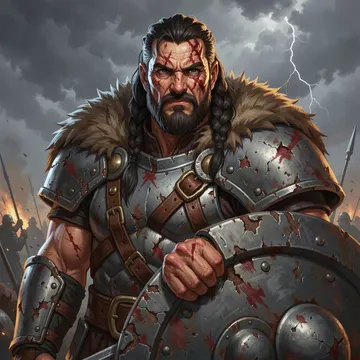 Barbarian / Fighter — the wall that hits back. The thing the rest of the party hides behind. Rage soaks the blows, Action Surge doubles the output, and a pure Strength bruiser simply refuses to fall down.
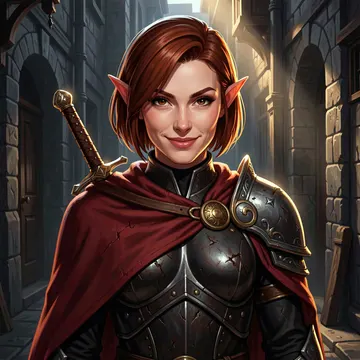 Fighter / Rogue — the duelist. The fight is over before you have finished drawing your sword. Action Surge lands a brutal opening Sneak Attack, then you skirmish out of reach — a Dexterity build that hits hard and is murder to pin.
 Bard / Warlock — the one who read the wrong contract. All charm on stage, a debt humming underneath. A Charisma caster with bard slots and a separate short-rest Pact Magic pool, so the music never stops.
The trade-off: every level you spend on a second class is a level your main class’s high-end features are delayed. Multiclassing is about earlier breadth, not a free upgrade.
Deep dive: the Sorlock
Picture a caster who has turned themselves into a magical machine gun. The “Sorlock” (Warlock / Sorcerer) is the cleanest demonstration of why two spell pools working together is so strong — and the generator rolls it today. The engine has three parts:
- Eldritch Blast — the attack, splitting into more beams as your total character level climbs.
- Agonizing Blast — the Warlock invocation that adds your Charisma modifier to every beam.
- Quickened Spell — Sorcerer metamagic to fire it as a bonus action and cast something else the same turn.
The trick that powers it all day: Pact Magic slots recharge on a short rest, and a Sorcerer can convert spell slots into sorcery points. Refresh the Warlock slots on a short rest, turn them into points, and spend those on Quickened Spell — a Charisma-fueled blaster that rarely runs dry.(Whether Pact Magic slots can feed Font of Magic is one of those famously-argued table calls — most groups allow it; clear it with your DM first.)
Skip the math — just describe it
The rules above are the reason multiclass sheets are so easy to get wrong by hand. So don’t — describe the character in a sentence on the character creator (try “a rogue 3 / monk 9 shadow assassin”) and a deterministic engine builds the full sheet: combined spell slots, each class’s own save DC, Warlock Pact Magic kept in its own pool, Extra Attack taken as the max, and every per-class feature scaled to the right level. The numbers are computed, not guessed — and cross-checked against D&D Beyond. Works on both the 2014 and 2024 (5.5e) rules.
The famous multiclass builds — and which ones we roll
Many of the most-talked-about builds reach for subclasses from across fifth edition, not just the best-known few. We implement those mechanics in our own words rather than copy any book, and the 2024 subclass roster the generator draws on is broad and still growing — so a lot of the legendary builds roll today, and the rest are a question of which subclass we’ve authored next, not a hard line.
- The Assassin ambusher — the Rogue’s Assassin, built to end a fight in the surprise round before most foes have moved.
- Battle Master maneuvers — the superiority-die tactician (a Fighter’s subclass from level 3), a favourite anchor for martial multiclasses.
- Psi Warrior & Soulknife — the psionic Fighter and the psychic-blade Rogue, both live.
- Eldritch Knight & Arcane Trickster — the spell-blade and the magical thief roll in full as single-class builds (their third-caster slots don’t yet stack into a multiclass split — that piece is next).
- The Hexadin / Hexblade — the Charisma-powered Paladin/Warlock that swings and casts off one stat. It leans on the Hexblade patron, which we haven’t authored yet.
- The Gloomstalker Assassin — the Assassin half rolls today; the Gloom Stalker ranger half is still on the worklist (and the 2024 rules rein the combo in).
- An Artificer dip — Artificer is a thirteenth class we don’t build yet, so its infusions and armor tricks are out for now.
One bit of legend, for flavour: a famous combo lets a level-1 Halfling stop a city-sized dragon in its tracks with a single opportunity attack — the Sentinel feat in action. Feat selection is coming to the build-out; for now the engine spends the optimal ASI in its place.
The line we actually hold isn’t a content list — it’s correctness and original wording. Every number on the sheet is computed by the engine and every description written from scratch, so the tool stays free, needs no books, and the math is right whether the build is a famous one or something you invented on the spot.
More tools
- Character creator — build any single- or multiclass character, levels 1–20.
- Leveling guide — what you get at every level, 1–20.
- Character sheet — printable, or auto-filled from a build.
- Character ideas — 55+ concepts to build in one click.
- Spell slot calculator — one class: slots, cantrips, spells to prepare + a spell picker.
Frequently asked questions
Can you multiclass in D&D 5e?
Yes. With your DM's permission you gain levels in more than one class. Your character level is the total of all your class levels, and your proficiency bonus is set by that total — not by any single class.
What are the requirements to multiclass?
You need at least 13 in the key ability of both the class you're leaving and the class you're joining. For example, Paladin requires STR 13 and CHA 13; Wizard requires INT 13. The full requirements are in the table above.
How does proficiency bonus work when you multiclass?
It's set by your total character level, never by any single class. A Fighter 2 / Wizard 1 is a 3rd-level character with a +2 proficiency bonus — the same +2 a single-classed level 3 has. Add up every class level, then read the bonus off that total: +2 through level 4, +3 at 5, +4 at 9, and onward.
How do multiclass spell slots work?
Add your full-caster levels to half of your half-caster levels (Paladin, Ranger) to get a combined caster level, then read your slots off the multiclass table. Warlock Pact Magic is separate — it keeps its own short-rest slots and does not count toward the combined level.
Is there a multiclass spell slot calculator?
Yes — the calculator on this page works out your combined caster level and combined spell slots from your classes and levels, keeps Warlock Pact Magic in its own pool, and handles the 2014 (round down) and 2024 (round up) half-caster rounding. It uses the same engine that builds the full character sheets.
How does multiclassing into Warlock affect my spell slots?
It doesn't add to your other slots. Warlock levels grant Pact Magic — a separate pool of slots that all recharge on a short rest — and those levels are excluded from the combined caster level that sets your normal multiclass slots. You track the two pools independently, though Pact Magic slots can still cast spells you know from your other classes.
Why do I have high-level spell slots but no high-level spells to cast?
Because slots and known spells follow different rules. Your combined caster level sets your slots, but each class only learns or prepares spells up to the level it could reach on its own. A Wizard 3 / Cleric 3 has 3rd-level slots but only 2nd-level spells — so you upcast lower spells into the bigger slots until one class reaches level 5.
Can Warlock Pact Magic slots fuel a Smite or cast my other spells?
Yes. Pact Magic is a separate pool that recharges on a short rest, but the slots are real spell slots — you can spend them to cast spells you know or prepare from any of your classes, and in the 2014 rules to power a Paladin's Divine Smite.
Does Extra Attack stack when you multiclass?
No. If two classes both grant Extra Attack, you take the higher one — they never add together. Features like Sneak Attack, Rage, and Ki also scale only with their own class's level, not your total character level.
Do cantrips scale with my class level or my total level?
Total character level. Cantrip damage steps up at character levels 5, 11, and 17 no matter how your levels are split — so a Fighter 18 / Wizard 2 still casts Fire Bolt for a full 4d10.
Do Barbarian and Monk Unarmored Defense stack?
No. You can't gain Unarmored Defense twice — your AC is locked to whichever class granted it first, so pick the formula you want before you commit.
What is the best multiclass in 5e?
It depends on your goal, but classic picks are Paladin/Sorcerer for burst damage, Cleric/Wizard for spell versatility, and Fighter/Rogue for a durable skirmisher. See the popular combinations above — or just describe the character and let the generator build it.
Can you build a Hexblade, Hexadin, or Sorlock?
The Sorlock rolls today — just describe it. The Hexblade and Hexadin lean on the Hexblade patron, which isn't in our subclass roster yet (it keeps growing), so those two don't roll quite yet. Plenty of the legendary multiclasses already build, though — Assassin, Battle Master, Psi Warrior, and Soulknife combos among them; the famous-builds section above maps which is which.
Does this work for the 2024 rules (5.5e)?
Yes. The generator builds multiclass characters on both the 2014 and 2024 rules. The one math difference: half-caster levels round down toward your combined caster level in 2014 and round up in 2024 — the engine handles it either way.
Can I just generate a multiclass character?
Yes — describe it in a sentence (for example, "a rogue 3 / monk 9 shadow assassin") and the generator builds the full, rules-accurate sheet: combined spell slots, each class’s own save DC, Pact Magic kept separate, and every per-class feature scaled correctly.
Is it free?
Yes — free, no login.